


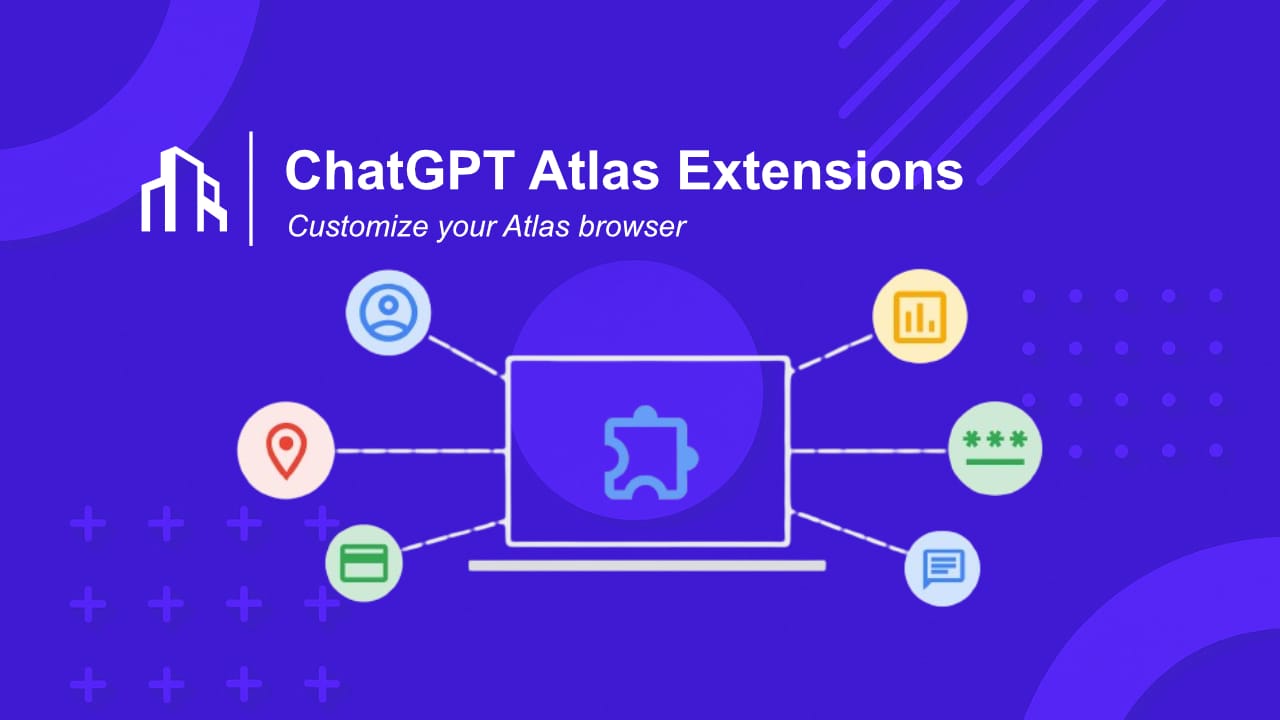
As ChatGPT Atlas begins rolling out, one question keeps coming up: can it be customized? If Atlas is a full browser experience powered by AI, people expect it to support extensions just like Chrome, Edge, or Brave. But OpenAI’s approach is different. Atlas isn’t built around plugins. It’s built around context.
Still, that doesn’t mean the idea of “extensions” is off the table. In fact, how OpenAI handles integrations in Atlas could determine whether it becomes the next dominant browser or just another closed AI system.
Discover smart AI tools to streamline your next automation
What Makes ChatGPT Atlas Different from a Regular Browser
Traditional browsers like Chrome rely on extensions to expand functionality.
You might use Grammarly for writing, Notion Web Clipper for saving pages, or Zapier for workflow automation.
ChatGPT Atlas, however, already has intelligence built in. Instead of relying on third-party scripts, it can:
- Summarize and rewrite content inline
- Translate text automatically
- Assist with form inputs or writing tasks
- Understand page context in real time
In other words, Atlas doesn’t need an extension to perform the core features that make people install add-ons elsewhere. It’s designed to replace much of that extension ecosystem using AI as the logic layer instead of code.
Why People Still Want Extensions
Despite its built-in capabilities, the demand for Atlas extensions makes sense.
Users want control. Businesses want customization. Developers want hooks.
Here’s what users are hoping for:
- Productivity tools: Integrations with Notion, Slack, HubSpot, or Airtable.
- AI agents: Specialized assistants that run inside Atlas for niche use cases.
- Workflow automation: Connections to Make.com, n8n, or Zapier.
- Security add-ons: Audit logs, encryption, or data compliance modules.
The problem is that OpenAI hasn’t yet opened the Atlas environment for external access. That’s by design to keep privacy and stability intact while the technology matures.
Current State: No Official Extension Framework (Yet)
As of now, ChatGPT Atlas does not support traditional browser extensions. There’s no extension store, no plugin manager, and no external API for embedding third-party tools.
Instead, OpenAI uses an internal architecture similar to its ChatGPT plugins and GPTs, which handle specific actions like retrieving data, formatting output, or running small scripts within a safe sandbox.
These components hint at what a future Atlas Extensions Framework could look like sandboxed AI add-ons that operate under strict user permissions and API controls.
What an “Atlas Extension” Might Look Like
Imagine opening your CRM in Atlas and being able to activate a contextual AI block like:
“Summarize this customer’s email history and suggest next steps.”
That’s not a Chrome extension it’s an AI micro-integration.
Instead of installing a plugin, you’d enable a contextual capability that runs directly inside Atlas, powered by OpenAI’s model and your authorized data.
These capabilities could be:
- Pre-trained GPTs tailored to business tasks
- Secure connectors to SaaS tools (CRM, project management, ERP)
- Custom workflow triggers that automate repetitive browser actions
Essentially, the “extension” becomes a lightweight AI agent that lives inside your browsing experience without ever leaving it.
How OpenAI Might Roll Out Integration Support
Based on OpenAI’s previous launches (Plugins → GPTs → Agents → Atlas), it’s likely the company will expand Atlas in stages:
- Private developer access: Invite-only APIs for partner companies.
- Public SDK: A developer toolkit to build small, safe Atlas apps.
- Marketplace model: Verified AI extensions available through ChatGPT or Atlas.
- Enterprise connectors: Direct integrations with major SaaS platforms.
This evolution mirrors how Chrome matured but built on AI rather than JavaScript.
For businesses, this could mean:
- Building custom Atlas “assistants” for internal teams
- Integrating Atlas with corporate systems via secure API calls
- Offering branded AI add-ons as part of their customer experience
Why OpenAI Is Taking Its Time
Opening an AI browser to third-party extensions too early could compromise user privacy. Extensions traditionally have deep access to web content which conflicts directly with OpenAI’s privacy-first model for Atlas.
Before extensions arrive, OpenAI needs:
- A robust sandbox model for AI code execution
- Transparent consent mechanisms for data sharing
- Clear rules for what AI agents can and cannot read
In short: Atlas will get extensions but they’ll look nothing like Chrome’s.
What Businesses Should Prepare For
Forward-thinking companies should start planning now.
When the Atlas SDK launches, developers and AI teams will need to think differently about “plugins” not as scripts, but as AI behaviors.
Start preparing by:
- Mapping existing browser-based tasks that could be AI-assisted.
- Identifying which systems (CRM, CMS, ERP) should connect with Atlas.
- Designing permission boundaries for safe AI automation.
- Evaluating privacy and compliance implications early.
Atlas won’t just host AI; it will interact with your data.
That’s powerful but it demands responsibility.
Final Thoughts
ChatGPT Atlas redefines what “customization” means in an AI-driven browser. Rather than stacking plugins, OpenAI is creating a single environment where AI handles the logic once split across dozens of tools.
Whether you call them extensions, assistants, or contextual agents the goal is the same: make the web smarter, faster, and more secure. The real question isn’t if Atlas will support extensions, but how controlled that future will be.